South Korea's metal recycling industry is well developed, but it is also highly competitive. Rising labor costs, limited industrial land, stricter environmental regulations, and increasing customer expectations mean that recycling companies must carefully balance productivity and investment. For many small and medium-sized recycling businesses, selecting the right equipment is often more important than purchasing the largest equipment available.
Many people assume that bigger machines always provide better results. However, in practical recycling operations, equipment should match the actual materials being processed. Most small and medium-sized recycling companies in South Korea do not handle extremely heavy steel plates, shipbreaking scrap, or oversized structural steel every day. Instead, they process steel bars, rebar, pipes, angle steel, flat steel, machine offcuts, automotive scrap, workshop waste, and mixed industrial metal scrap.
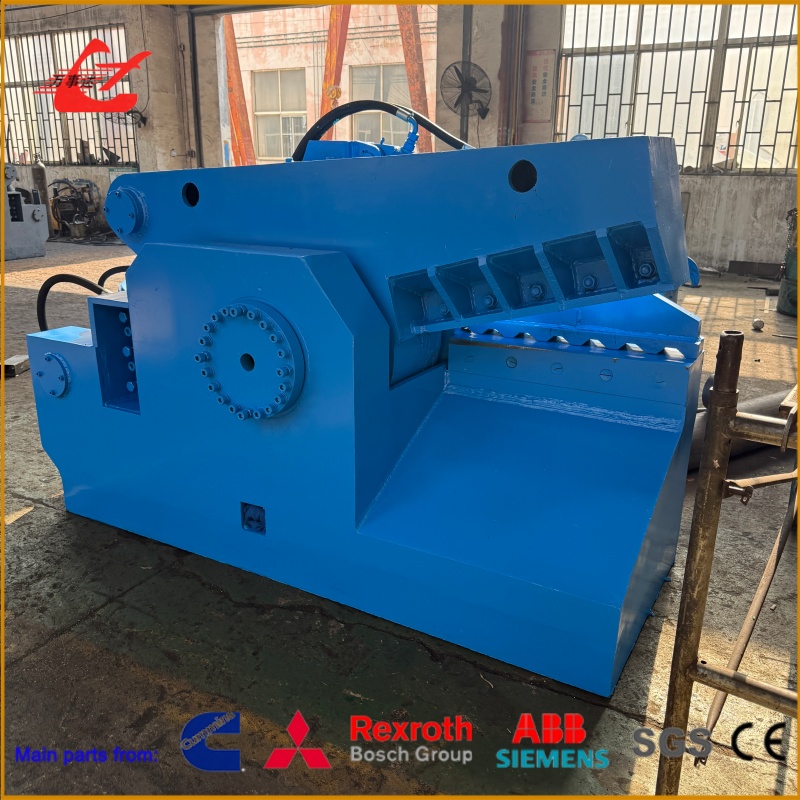
For these applications, a 250-ton Alligator Shear often provides a more practical solution than larger cutting systems.
An Alligator Shear is designed to process medium-sized ferrous materials efficiently without requiring excessive investment or installation space. Compared with large gantry shears, it offers a lower initial investment while still delivering strong cutting performance for daily recycling operations.
One of the main reasons why South Korean recyclers choose an Alligator Shear Cutter is space efficiency. Many recycling facilities are located near industrial parks where land prices are relatively high and expansion opportunities are limited. Large cutting systems require significant installation space, while a compact alligator shear can be integrated into existing operations more easily.
A 250-ton Hydraulic Metal Alligator Shear also provides greater operational flexibility. Small and medium-sized recyclers often receive different types of scrap every day. One day may involve steel pipes and rebar, while the next may involve machinery scrap or workshop offcuts. The ability to handle a wide range of materials makes this type of equipment particularly valuable.
Another important consideration is processing consistency. Waste Scrap Metal Cutting is not only about reducing material size. Consistent cutting improves storage management, truck loading efficiency, inventory organization, and downstream sales. Materials that are cut into regular lengths are easier to stack, easier to transport, and easier to sell to steel mills or metal processing companies.
Labor efficiency is becoming increasingly important across South Korea. Many recycling businesses struggle to recruit and retain workers for physically demanding cutting tasks. By using a hydraulic cutting system, companies can reduce manual operations while maintaining stable daily output. Workers can focus on sorting, loading, and quality control rather than spending hours manually cutting scrap.
Maintenance costs also influence purchasing decisions. While larger machines may provide higher capacity, they generally require greater investment, more maintenance resources, and higher operating expenses. For many medium-sized recycling businesses, a 250-ton alligator shear provides a better balance between productivity and long-term ownership cost.
Environmental management is another growing concern. More efficient processing helps reduce yard congestion, improve workplace organization, and support safer operations. Properly processed scrap is easier to manage and transport, helping recycling facilities meet modern operational standards.
The flexibility of a Hydraulic Metal Alligator Shear also supports future growth. Many businesses start with moderate processing volumes and gradually expand their customer base. Choosing equipment that matches both current and future requirements helps avoid unnecessary investment while maintaining growth potential.
WANSHIDA has more than 40 years of experience manufacturing hydraulic recycling equipment. With our own factory, professional engineering team, and customized production capabilities, we help customers select equipment based on actual material characteristics, production targets, site conditions, and local voltage requirements. CE and ISO9001 certifications are available for customers who require international project documentation.
For many South Korean recycling companies, success depends on making practical investment decisions rather than pursuing the largest machine available. A properly selected Alligator Shear can improve productivity, reduce labor costs, optimize space utilization, and support long-term business growth. This is why the 250-ton Hydraulic Metal Alligator Shear continues to be one of the most popular solutions for small and medium-sized metal recycling operations in South Korea.