A Hidden Challenge Behind Manufacturing Growth
As industries such as machining, automotive components, foundries, and metal fabrication continue to expand, many manufacturers are facing an increasingly common problem: workshop space is becoming more limited.
While companies focus on increasing production capacity, adding equipment, and improving delivery performance, another issue is growing quietly in the background—metal chip accumulation.
Steel turnings, aluminum chips, cast iron swarf, and machining waste are being generated in larger quantities than ever before. Although these materials are valuable recyclables, they often occupy production areas, storage zones, and transportation routes inside the factory.
For many businesses, the challenge is no longer just waste management—it is operational efficiency.
Why Do Metal Chips Create Serious Space Problems?
Metal chips generated during machining processes typically have several characteristics:
-
Large volume compared to their weight
-
Irregular shapes
-
Residual cutting fluids
-
Difficult handling and storage
-
Easy to scatter during transportation
Aluminum chips, steel turnings, and cast iron chips can quickly fill storage areas even when the total weight remains relatively low.
A machining company manager recently noted:
"Less than two tons of metal chips are generated each day, but after one week, they occupy nearly the entire scrap storage area."
This situation is becoming increasingly common across manufacturing facilities worldwide.
Rising Storage Costs Are Changing Waste Management Strategies
Traditionally, many manufacturers simply collected loose metal chips and sold them periodically to recycling companies.
However, rising labor costs, warehouse expenses, and land prices are forcing companies to rethink this approach.
Common problems include:
-
Reduced warehouse efficiency
-
More frequent scrap transportation
-
Increased labor requirements
-
Higher safety risks
-
Limited opportunities to improve scrap value
Many factory managers are beginning to realize that:
Scrap management is no longer just housekeeping—it is part of overall operational performance.
Why Are More Companies Investing in Metal Briquetting Press Equipment?
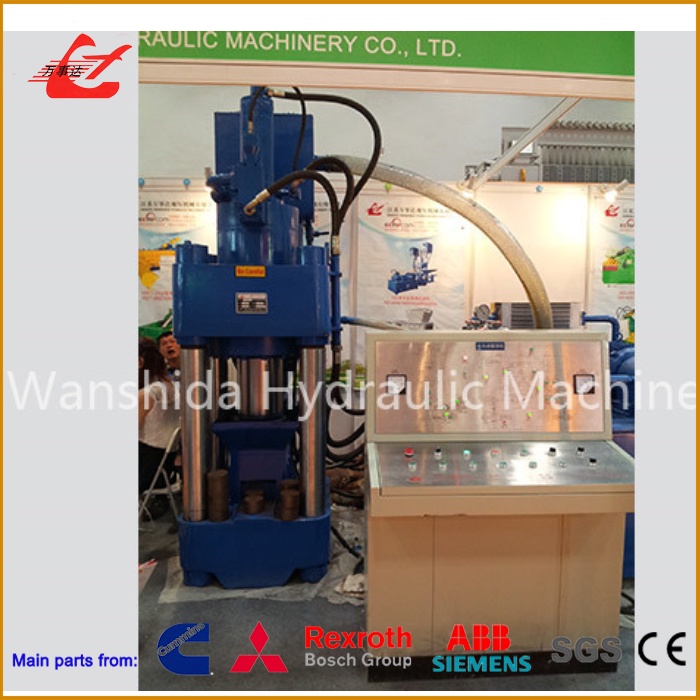
To address space limitations, an increasing number of manufacturers are adopting Metal Briquetting Press systems.
Unlike loose storage methods, briquetting technology compresses metal chips into dense, compact briquettes.
After compression, companies can achieve:
-
Significant reduction in storage volume
-
Improved logistics efficiency
-
Cleaner workshop environments
-
Higher scrap recycling value
For manufacturers, this means more available space for production activities rather than waste storage.
From Storage Challenges to Profit Opportunities
Many businesses initially invest in briquetting equipment simply to save space.
However, they often discover additional benefits after implementation.
Compressed metal briquettes are:
-
Easier to stack
-
Easier to transport
-
More attractive to recyclers
-
Better suited for foundry and steel mill charging
Some recycling companies report that high-density briquettes receive stronger market acceptance than loose metal chips.
This trend is one of the reasons demand for Hydraulic Metal Balers and metal chip processing equipment continues to increase globally.
Real-World Example: Improving Efficiency in an Automotive Parts Factory
An automotive component manufacturer generated large quantities of steel and aluminum chips every day.
Previously, the company stored scrap in bulk bags before collection.
As production expanded, waste accumulated more rapidly, creating several challenges:
-
Insufficient storage space
-
Restricted forklift movement
-
Reduced operational efficiency
-
Higher scrap handling costs
After introducing a metal chip briquetting system, the company experienced noticeable improvements:
-
Scrap volume was significantly reduced
-
Storage periods became longer
-
Valuable floor space was recovered
-
Scrap management became more organized
According to plant management, the most valuable benefit was not simply higher scrap value, but a cleaner and more efficient production environment.
Industrial Upgrading Is Transforming Waste Management Practices
As manufacturers continue pursuing lean production and automation, waste management is becoming an increasingly important part of operational planning.
Modern factories are no longer treating scrap as an unavoidable by-product. Instead, it is being managed as a recoverable resource.
Whether through Ferrous Metal Balers, Hydraulic Metal Balers, Metal Baler Machines, or metal chip briquetting systems, the goal remains the same:
Improve resource utilization, reduce operating costs, and create a more efficient workplace.
Conclusion
Limited workshop space is not simply a storage issue—it is a reflection of overall operational efficiency.
For manufacturers producing large volumes of steel chips, aluminum chips, copper chips, or cast iron swarf, reducing waste volume and improving scrap management are becoming critical business priorities.
By adopting technologies such as Metal Briquetting Press, Steel Scrap Metal Baler, and other modern recycling equipment, companies can solve space constraints, improve productivity, increase scrap value, and build a more sustainable manufacturing operation.