Across Australia, many scrap recycling companies are dealing with the same practical problem: loose metal scrap takes up too much space before it can be transported, sold, or sent to steel mills. For recycling yards in cities such as Melbourne, Sydney, Brisbane, Perth, and Adelaide, land cost, site management, and loading efficiency are becoming more important than before.
In the scrap recycling business, storage space is not only a yard management issue. It directly affects daily operation cost, truck loading efficiency, safety, and resale value. Loose steel scrap, mixed ferrous waste, old machinery parts, pipes, and metal offcuts are difficult to stack neatly. When these materials remain in irregular shapes, they occupy more space and make the whole recycling site look crowded and less efficient.
This is especially common in Australia because scrap sources are often spread across wide areas. Materials may come from construction sites, farms, mining maintenance workshops, automotive repair centers, demolition projects, and small industrial factories. Before these materials reach the final buyer, they often need to be collected, sorted, compacted, and transported over long distances.
For many recyclers, the key question is simple: how can we reduce the volume of loose scrap before transportation?
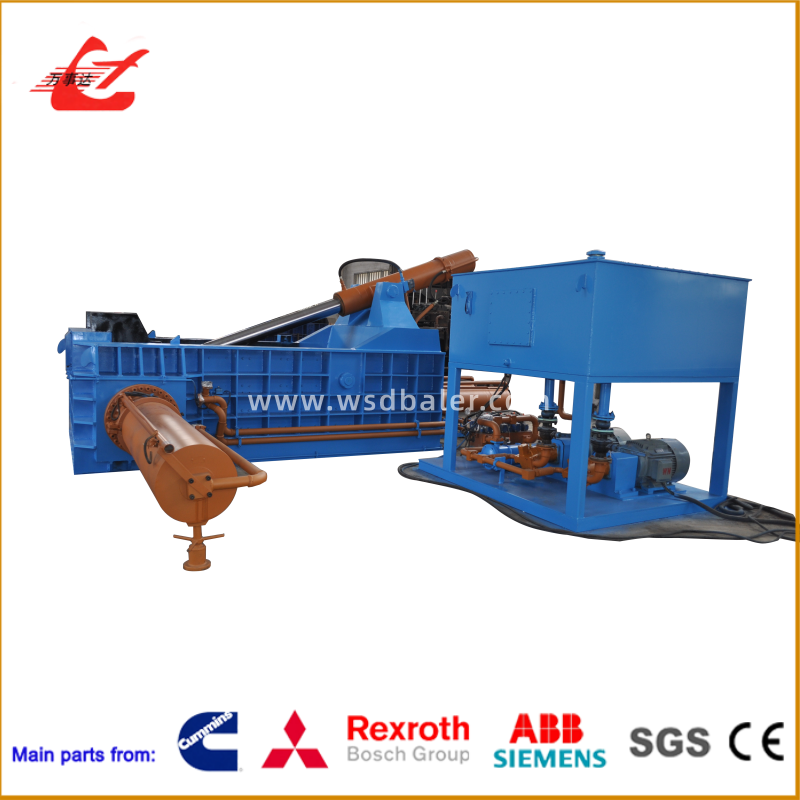
One practical solution is to use Hydraulic Metal Balers. Instead of leaving scrap in loose and irregular forms, a hydraulic baler compresses metal waste into compact bales. This makes the scrap easier to stack, easier to load, and easier to transport.
Compared with manual sorting or simple cutting, Metal Baler Machines can help improve the whole material handling process. Once the scrap is compressed into regular bales, the recycling yard can use its storage area more efficiently. Trucks can carry more useful material in each trip, and downstream buyers can receive scrap in a cleaner and more manageable form.
For Australian scrap yards handling ferrous materials, Ferrous Metal Balers are often suitable for materials such as steel offcuts, light steel scrap, pipes, profiles, sheet metal, and mixed industrial scrap. If the material is mainly steel scrap, a Steel Scrap Metal Baler can help customers reduce loose volume and improve transport preparation before selling to steel mills or metal traders.
The value of a metal baler is not only about pressing force. For Australian customers, a good solution should match the real scrap type, daily handling volume, feeding method, available space, local voltage, and transportation plan. A recycling yard near an industrial zone may need a compact machine for regular daily use, while a larger regional scrap processor may need a heavier model with higher capacity.
Another point Australian customers often consider is labor efficiency. With labor costs remaining high, relying only on manual handling is not always economical. A hydraulic baler allows workers to focus on sorting, feeding, quality control, and loading, while the machine completes the main compression process. This can reduce physical workload and make site operation more organized.
For customers who export scrap or supply steel plants, bale quality also matters. More regular and dense bales can reduce scattered material during loading and unloading. They also help improve container or truck space utilization, which is important in a market where transportation distance can be long.
When choosing a baler, customers should not only ask for the lowest price. A low-cost machine may seem attractive at first, but if the structure is weak, the hydraulic system is unstable, or the bale density is not enough, the long-term operating cost may become higher. For Australian recycling companies, machine reliability, hydraulic stability, spare parts support, and customization capability are more important for long-term use.
WANSHIDA has more than 40 years of experience in hydraulic recycling machinery manufacturing. With our own factory and professional engineering team, we can provide customized hydraulic baling solutions according to different scrap types, site layouts, voltage standards, and customer production goals. CE and ISO9001 certifications are available for customers who need formal technical documents.
For Australian scrap recycling companies, solving the problem of loose scrap is not only about buying a machine. It is about improving yard management, reducing transport waste, lowering labor pressure, and building a more efficient recycling process. As the recycling industry continues to grow, Hydraulic Metal Balers are becoming a practical solution for companies that want better space use and more stable daily operation.