As global manufacturing enters the Industry 4.0 era, competition has shifted from sheer production capacity to the "Resource Turnover Rate." For machining centers generating thousands of tons of metal swarf annually, waste management is no longer a secondary cleanup task but a core financial metric directly impacting gross margins.
Industry Reality: The "Resource Black Hole" of Loose Chips In the foundry and smelting industries, energy consumption accounts for over 40% of operating costs. Yet, many plants still charge loose chips directly into furnaces. Due to the vast surface area and adhering industrial oils, these chips undergo violent oxidation upon contact with heat, resulting in excessive slag and low metal yield. This "resource black hole" wastes expensive raw materials and keeps a company's carbon footprint unnecessarily high.
Tech-Driven: Multi-Dimensional Value Analysis of Briquetting Systems To counter this challenge, adopting a high-performance Scrap Briquetting Press has become a strategic consensus among industry leaders. By achieving extreme physical compression, enterprises are undergoing an efficiency revolution:
-
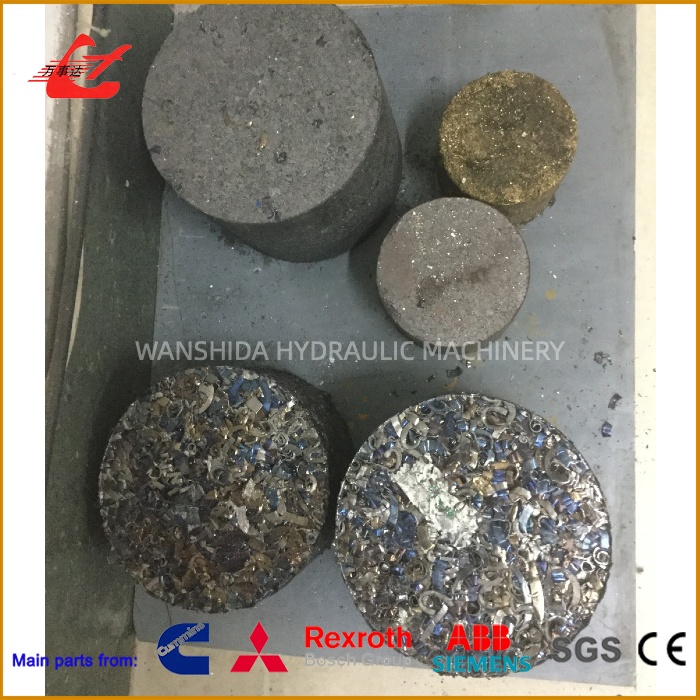
The "Gold Standard" for Smelting Yield: Metal blocks processed by a hydraulic metal briquetting machinehave virtually all internal air expelled, reducing the oxidation surface area by thousands of times. During smelting, these briquettes sink directly to the bottom of the molten metal, minimizing burn-off. Statistics show that charging with briquettes can increase metal yield by 15%-20% compared to loose chips.
-
Tackling Material-Specific Challenges: Specifically for cast iron shavings—which are brittle and prone to shattering—improper handling leads to severe dust pollution. A specialized Cast iron briquetting machineprecisely controls pressure to transform loose iron dust into standardized high-density solids, effectively eliminating dust explosion risks and improving the workplace environment.
-
Economic Closed-Loop Across the Value Chain: A versatile briquette making machine is more than just environmental equipment; it acts as a "miniature oil refinery." It can recover over 90% of the cutting fluids carried by the swarf. Once filtered, these fluids return to the machines for reuse. In large-scale continuous production, this recovery alone can cover the equipment's initial investment within 6-8 months.
Conclusion: From "Linear Consumption" to "Circular Profitability" In an era of increasingly strict ESG (Environmental, Social, and Governance) criteria, transforming waste into high-value raw material is the essential path for industrial upgrading. By optimizing resource structures through technology, you are not only answering the call for green manufacturing but also building a solid cost moat for your enterprise.